Virginia Home Grown
Clippings: Our Favorite Plants
Clip: Season 25 Episode 4 | 26m 46sVideo has Closed Captions
Get expert advice for growing popular vegetables and shrubs!
Visit a family owned nursery developing new blight resistant boxwood cultivars. Then meet a best-selling garden author committed to sustainable food production and learn how to improve your harvest through her tips and plant choices. Engage with us or watch full episodes at Facebook.com/VirginiaHomeGrown and vpm.org/vhg. VHGC 508.
Problems playing video? | Closed Captioning Feedback
Problems playing video? | Closed Captioning Feedback
Virginia Home Grown is a local public television program presented by VPM
Virginia Home Grown
Clippings: Our Favorite Plants
Clip: Season 25 Episode 4 | 26m 46sVideo has Closed Captions
Visit a family owned nursery developing new blight resistant boxwood cultivars. Then meet a best-selling garden author committed to sustainable food production and learn how to improve your harvest through her tips and plant choices. Engage with us or watch full episodes at Facebook.com/VirginiaHomeGrown and vpm.org/vhg. VHGC 508.
Problems playing video? | Closed Captioning Feedback
How to Watch Virginia Home Grown
Virginia Home Grown is available to stream on pbs.org and the free PBS App, available on iPhone, Apple TV, Android TV, Android smartphones, Amazon Fire TV, Amazon Fire Tablet, Roku, Samsung Smart TV, and Vizio.
Providing Support for PBS.org
Learn Moreabout PBS online sponsorship(gentle upbeat music) >>I've been growing boxwood and propagating, planting, loading trucks of boxwood since I was literally about three or four years old.
And when boxwood blight came around in 2011, we heard about it, and our first thought was that, "Hey, we may have something that has resistance."
>>I've been working here 33 years.
We grow as much of our own food as we can, and this is just for feeding the 100 people.
100 people do eat a lot of food.
With lettuce, for us, there's no going back, because we need to get, oh, 100 heads a week.
(birds chirping) >>Production funding for "Virginia Home Grown Clippings" is provided by viewers like you.
Thank you.
(gentle upbeat music) Welcome to Virginia Home Grown.
Today we're talking about our favorite plants.
Really your favorite plants!
These are the ones we hear most about from you.
Vegetables, including tomatoes and a landscape shrub found in almost every yard.
First, Shana Williams visited the Twin Oaks intentional community in Louisa to meet with gardener and author Pam Dawling to talk about the insights she gained over 25 years managing the community vegetable garden responsible for feeding 100 people.
Let's take a look.
>>This is Twin Oaks community.
We're in Louisa County between Richmond and Charlottesville, and we are an intentional community of 100 people.
We share our income and we share our work and we share our mistakes and we share our expenses.
So, this is the food garden.
This is just for feeding the hundred people.
>>Well, what I noticed is how beautiful and lush your crops look.
But I'm also looking at how rich your soil is.
>>Yeah, well.
>>You need amendments and certain things that you add to your soil to enrich it?
(Pam laughs) >>Mostly it's compost that we make here.
We also gain some from cover crops, especially in the winter, but also summer cover crops like buckwheat.
We grow them and we turn them back into the soil.
>>The spacing, which you grow in your garden is about what, two and a half acres, three acres?
>>Yeah, it's about two and a half acres currently.
>>So, I'm quite sure that you guys are harvesting thousands of pounds probably a month.
>>Yeah, lots, yeah.
(Pam and Shana laugh) Yeah, lots of harvesting.
It's a sign of success, right?
>>Yes, speaking of success, I understand that you are author of several successful garden books?
>>Yes, my most recent one is the second edition of, "Sustainable Market Farming."
And it's a huge fat book about all kinds of vegetables.
First edition, I wrote over 10 years ago, and in between times I wrote a book about growing food in a hoop house.
And that was based on my experience here.
>>Well, so you're doing a fantastic job.
>>It works.
>>It definitely does.
>>Yeah.
>>I want a hoop house now.
>>Yeah, it does make everything easier, >>But also notice that you chose to grow your cucumbers on the ground.
>>We grow a lot of different crops in the winter in there, and then we grow like early spring and early summer crops.
And so like the tomatoes will come out the end of July, 'cause by then we'll have plenty coming from outdoors.
And the cucumbers and the squash are just our first ones.
When they peak and they're not doing so well, we just pull them out and we rely on harvesting outdoors.
So, we don't like to spend a lot of time putting up trellises.
Also, in the hoop house, you've gotta think about the light, more than you do outdoors.
And so we don't want tall plants blocking the other crops further to the north.
So, we just get a bush variety of cucumbers.
It's Spacemaster and we grow them and we keep them onto a four foot-wide bed, by pushing them back in when they try to escape.
>>Do you find that some of the things that you're planting are more resilient than others?
>>Oh yeah, definitely.
(Pam laughs) We always read the small print in the catalogs to see if it says resistant to this or that disease.
Recently, I just learned of a Swiss Chard variety that is resistant to this Cercospora Spot Disease that we get.
So, we're trying some of that this year.
>>Tell me about some of the organic methods or the companion planting methods that you use.
>>Right, well, we do a bit of companion planting, in that, like we grow the Nasturtiums in with the squash and the cucumbers to fend off the striped cucumber beetle.
And we do plant little clusters of flowers to attract pollinators and other beneficial insects.
And we just plant those at the ends of the beds of the vegetables.
And we do crop rotation.
>>Yes.
>>I do think crop rotation is important that you don't plant the same thing in the same place two years running.
(Pam and Shana giggle) So, we do that and that will help with pests that don't move very far, or diseases that could be in the soil.
And also we do succession sewing.
Like with beans, we plant them maybe five times during the growing season.
They're not right next to each other.
So, if the first ones get a disease, it doesn't jump straight to the second ones.
>>That's wise.
>>Yeah.
>>You do your lettuce the same way?
Succession planting.
>>Well, we haven't this year, we just do lots.
>>Yeah.
>>Because we eat oh, 100 heads a week.
>>Okay, any particular variety, especially in these very hot summers that we have?
>>Yes, we mostly grow the Batavian lettuces in the summer.
They're the most heat-resistant ones, although there's also a romaine called Jericho that is heat-resistant.
And there's, oh, New Red Fire is surprisingly heat resistant, but it doesn't make very big heads.
So, we try to grow different ones so we're not serving up the same kind of lettuce every week.
>>I know that you probably love a ton of different types of vegetables, okay.
But tell me some of your favorites.
>>I really enjoy ground sweet potatoes, partly 'cause you put them in the ground and then they grow a lot and you don't do much for a while.
>>Leave and forget.
>>Yeah, and then you dig 'em all up and it's fantastically satisfying to see them all and then cure them.
And then you've got food for months and months.
It gives me a big sense of satisfaction, food security.
>>What type of variety do you grow?
>>Well, it's a bit of a mixture of Beauregard and Georgia Jet.
They're similar and they're both fast, and they're both tasty.
>>I'm also curious about some of the common mistakes that gardeners might have when they're growing their vegetables.
You seem to be so successful.
Tell us some of those common mistakes that we need to avoid.
>>Thinking about the squash, one thing is that when you harvest them, it's important to cut the zucchini, especially off of the vine.
So, you've got a bit of the stem end.
>>Yes.
>>And you don't leave that behind.
'Cause if you leave that behind, the plant acts as if fall is here.
It's all over.
>>Oh.
>>And it doesn't make as many new squash.
>>What about tomatoes?
>>Tomatoes.
>>What are some of the common mistakes that people make with tomatoes?
>>Well, one of the things is try not to touch the plants at all while the leaves are wet.
>>Yeah.
>>Because then you can transfer fungal diseases from one to another.
And don't let anybody who uses tobacco touch your tomato plants.
(Pam laughs) >>Oh, why?
>>Because they can transfer Tobacco Mosaic Virus.
And then once you've got that, it's, you've got it forever kind of thing, so.
>>What varieties do you enjoy growing?
>>Well, if we're doing paste tomatoes, we like Roma.
And for early ones, we like mountain magic, it's fairly small, but it's very tasty and productive, and it doesn't succumb to diseases much.
>>That's key.
>>So we like that one.
We like Jubilee, it's a big orange slicer.
We do that one.
Another one we really like is Garden Peach, which is the unusual furry skinned tomato.
>>Oh, okay.
>>It's very tasty.
It doesn't get many troubles like, insects don't seem to wanna bite it.
So, we like that one.
It's unusual though.
>>And I noticed that the lower leaves, you guys are constantly removing the lower leaves.
>>We do.
>>Okay.
>>We remove any that touch the ground, 'cause we don't want to spread diseases.
So, we do that about once a week, I suppose.
We go through and we take off the lower leaves.
Also, once the plants get quite big, they're not really using those lower leaves.
There's not much light reaching them.
They don't photosynthesize much.
So, the plant doesn't really need them and they're just a possible source of trouble.
>>Do you snap off the suckers as well?
>>We do, yeah.
We just leave two main stems and then we pinch out the the suckers, yeah.
>>Yeah, 'cause I saw not a lot of leaf foliage, but a lot of tomatoes.
>>Right, that's what we're going for.
(Pam and Shana laugh) We're not gonna eat the leaves.
>>Very productive.
(Pam and Shana laugh) I'm gonna try more of those methods that you're using.
>>Yeah.
>>You know what you shared was wonderful, thank you.
I really appreciate you allowing us to come and visit your beautiful garden.
>>You're very welcome.
(mower engine roars) It's really nice to spread garden chat with other people that are interested in growing vegetables.
(mover engine roars) Wow!
Pam's years of experience have led her to so many gardening insights.
I encourage you to look into different vegetable cultivars.
There could be a better option out there that suits the growing conditions in your garden.
And next, Amyrose Foll has tips to share for growing another popular vegetable, corn, and reminds us that there are many more varieties we can grow aside from the usual sweet corn.
(upbeat music) >>Corn is the quintessential American vegetable and grain.
It's been grown in this continent for thousands of years and it's a favorite on backyard barbecue menus and family get-togethers for the 4th of July.
Whether you're growing sweet corn or you're growing a grain corn, like flour corn, for grinding and creating masa, you wanna make sure that you've got several conditions present.
You have to have enough corn in that area to be able to properly pollinate your plants and you want to be able to have good, healthy plants, so feeding is very important.
They are heavy feeders of nitrogen.
So when you plant densely, like you see here, you're going to need to probably amend your soil a little bit.
I like to plant densely, because in Central Virginia, we get a lot of wind.
Unlike other vegetables, corn won't tap down into the soil.
The brace roots come out at the bottom, but where that kernel is in the level of the soil, it is never gonna get deeper than that.
So make sure you're planting deep to try to offset the wind that we have.
We wanna make sure that they are nice and healthy before they silk out and tassel out, because each of those silks is going to take up pollen from those tassels, and each one creates a kernel, which is why you need to have enough plants and enough wind pollination to get really good, juicy, delicious corn cobs.
If you wanna plant more than one variety of corn and you don't want them to cross-pollinate, maybe you don't have a lot of space in your garden, don't worry about it.
You can separate by time.
Corn will only silk out and tassel out for about 10 to 14 days during the course of its maturity.
So you would choose varieties that have the same days to maturity, like these two here, and you're gonna plant them about three weeks apart.
That way, there's no chance of cross-pollination, so you're going to get true-to-type corn cobs from each variety throughout your growing season.
I generally plant about five varieties a year.
In Virginia, we have a great, long growing season for corn, depending on the variety, so I can squeeze those in very early and very late into the year, planting as late as August for some varieties.
And these ones, you can see they're in totally different stages of growth.
This is a Peruvian variety from the Andean Mountains.
It's a beautiful speckled variety.
Kind of short 'cause it's pretty cold in the mountains.
And then this, that's quite a bit bigger in the back, is Glass Gem Corn, and it is about three weeks ahead of that variety up there.
Absolutely gorgeous.
I love this corn.
A lot of people ask me whether certain varieties of corn are edible.
All corn is edible if you know how to use it, because there's different applications for different kinds of corn.
Not everything is the sweet corn that you see in the grocery store.
So, before you head to your garden center to get a run-of-the-mill variety, I encourage you to maybe try a heritage variety like we have here and explore what you can do in your garden and your kitchen and all of the different applications and uses for all of the beautiful jewels of the garden that corn is.
As Amyrose shared, sowing corn seeds deeper and tighter together not only reduces blow over, but improves pollination.
This, along with regular fertilizing, will provide a bountiful corn harvest.
And now let's take a look at my visit to Saunders Brothers Nursery in Piney River to learn how a century old family business is still innovating by creating a new line of boxwood blight resistant plants.
>>Over the years, we have collected many, many cultivars of boxwood.
And so when boxwood blight came around in 2011, we heard about it and our first thought is that, hey, we may have something that has resistance.
And we took two truckloads of plants down to North Carolina State to be tested for box blight resistance.
>>Yes, I can't think of a garden that does not have a boxwood in it.
They're so prevalent.
But how did you figure out which ones were more resistant?
>>Well, English has been around forever.
English boxwood or Suffruticosa has been around forever.
When I was in high school, I loaded thousands and thousands of those plants on trucks to deliver from our nursery.
It was our number one plant.
And so we had plenty of those and so we put those into the tests and we found out sure enough, that they were extremely susceptible.
So susceptible that now we use it as an indicator plant that there's blight in a garden or in our greenhouse or wherever.
And that is a huge part of where we should go with boxwood blight.
We gotta get rid of the English boxwood.
>>But you've also learned through your research and trials that it's the Asian boxwood that actually have more, I'll say, resistance to blight than those of the European descent.
So, that's where you're focusing your research?
>>Yeah, just about everything that we or the survivors, the ones that we think have a future are the Asian cultivars.
And so we're moving very heavily in our program.
And the Asian cultivars just do better.
I mean, I can look right here in the landscape and these are Asian cultivars.
And this, back 20 years ago when I moved into this house, there were huge English boxwood here.
And here's a Japonica variety, which is an Asian variety, which is doing great.
>>Yeah, so it's not to get rid of boxwood.
It's let's take away what we have, which we know is susceptible and plant what, through your research we're learning, is resistant.
And so you've developed a number of cultivars >>Yes.
>>Over the years, but how do you develop something like that?
Is it just trial and error?
>>Yes, it really is.
There's no real easy way to do that.
We have a research facility down in North Carolina.
It's a three and a half hour drive.
So we do not want to introduce boxwood blight into our home gardens or into our nursery.
So we're very careful, we go down, we do our work.
We set out replicated trials where we will look at different varieties and try to figure out which ones have the best resistance to blight.
And the boxwood leaf miner also is an insect, which is a big deal.
I think we ought to emphasize too, though, that the most important thing about a boxwood is it has to look pretty.
>>Has to have your wow factor.
>>We call it a wow factor.
>>Yeah.
>>It has to look pretty.
And so that's the first thing we look at and then we look for insect and disease resistance.
>>And through that, you've developed a new generation.
>>Yes, and so we have right now, two plants in our family of plants, our NewGen family, but we have many more to come.
We will introduce two more in a couple of years.
And they all share the, >>Wow factor.
(laughs) >>Yes, the wow factor, the insect and disease resistance.
And they have to be easy to grow too.
We can't overlook that.
>>Yeah.
>>For both the nursery man and for the homeowner, they have to be fairly easy to grow, fairly low maintenance.
>>Mm hm.
In the industry, there's a need for plants that grow at different heights, different sizes, even different forms, so what do you have here?
>>I should preface that with our goal with NewGen boxwood is to create an artist's palette of many different varieties of different size, different shapes.
So now we are breeding boxwood, and we really just started that about six or seven years ago.
>>Okay.
>>So we really just are starting to get our feet wet in that.
We're looking for plants that have many different sizes and shapes.
So right here, I brought five different plants.
And most people would look at these and say, these are not even boxwood.
>>Yeah.
>>But if I look at these two, these are sort of extremes right here.
If you look at this plant and it's really tall and skinny.
It's a bean pole.
And by itself it's not very pretty, but if it fills in, I think it could be really nice.
>>Yeah.
>>And then this is an extreme dwarf plant, >>Mm hmm.
>>With small leaves and you know, it'll keep a very tight size over time and it's kind of a neat plant.
But these are just some of the plants that we're testing and everything in between.
>>Yes, these aren't finished products.
These are just, I'll say the beginnings or the middle.
>>Yes, so we are testing literally thousands, tens of thousands of different plants.
And we're very quick to throw out the ones that don't show promise, that have insect or disease resistance or whatever, and to find plants that do better.
Yeah.
>>That's fantastic.
But you're looking towards sustainability.
You're looking toward plants that are disease and insect resistant so we're not having to go out and spray.
>>Yes, absolutely.
We are looking for plants that people can plant out and have very low maintenance and do very little on.
These plants here, we prune them once a year, and other than that, there's not a whole lot of maintenance.
And we don't like spraying.
Nobody likes spraying.
>>No.
>>And so we're trying to avoid that.
>>Yes, yes.
And these are the new alternatives.
So with our NewGens here, I'll say ours, 'cause I'm part of the industry and I'm excited to be able to have these options.
You know, you've got two different cultivars that you're introducing.
>>Yes.
>>Can you tell me about what the difference is in these two cultivars?
>>Yes, so this particular cultivar here is NewGen Freedom.
It's a very fast growing, really green and compact plant.
It does require a fairly aggressive pruning to keep the shape, but really beautiful green, lush foliage.
NewGen Independence is a high-gloss leaf, a little slower growing plant, takes a snow load really nice.
Just a really nice, nice plant.
Just very classic boxwood look.
>>Good type, huh?
>>Yes, yes.
>>Excellent.
Well, you've got the momentum going, but it's so important to get it out to the homeowner.
>>Yes.
>>So what's the next steps for Saunders Brothers?
>>So we've been selling NewGen boxwood since 2018, and on a fairly regional basis, you know, mainly the Mid-Atlantic area and a little bit into the Northeast and a little bit into the Midwest.
But we were approached a few years ago by the Proven Winners brand of plants.
And so we are partnering with them, and then they are taking the plants to the market and selling them all the way to the consumer level.
>>I love this because as people are working in their gardens and they're discovering maybe they do have a problem of boxwood blight in their garden, they then can go to their garden center and purchase a plant to replace it that will be resistant to that blight.
>>Yes.
>>And that's exciting.
>>Yes, we talk about resistance.
On our tags, we say good resistance with proper care.
You cannot overlook the best management practices.
Just something as simple as mulching the plants is so important to mitigate the effects of boxwood blight.
>>Yeah, so you just don't throw these plants in the ground and walk away.
>>You do not, because we have yet to see any variety not show any symptoms at all of boxwood blight.
And I said it earlier, the English boxwood is the most susceptible.
So we're encouraging people to get rid of the English boxwood from their gardens over time and to replant with more resistant cultivars.
>>And that's a great place to end as we look toward the future, knowing that yes, you can replace it and you'll have options.
>>Yes.
>>And I thank you.
I thank you to everybody involved and for Saunders taking the lead on this.
Boxwood is deer resistant due to the alkaloids present in the plant.
Knowing a Virginia company is one of the leaders in hybridizing boxwood blight resistant shrubs is reassuring for the future.
Next, Randy Battle has tips to share on growing and harvesting one of his favorite vegetables, broccoli.
(light percussion music) >>The beginning of summer is here, and it's so exciting because there are so many things that are blooming and blossoming, and it's time to harvest a lot of our fruits and vegetables.
One of my favorite things to grow is broccoli.
Yes, you guys, you can start from seed, or you can buy a starter plant at a local nursery.
I love growing broccoli.
Not only is it high in nutritional value, it's just fun to watch the florets grow.
And not only can you eat the florets, but you're also able to eat the leafy greens.
You can saute them.
You can boil them.
You can add smoked meat to them if you like.
You know, Southerners, we love smoked meat.
When it comes to the heat factor, broccoli is not too happy about a lot of heat, so you want to go ahead and pick it before it gets extremely hot in your garden.
Now, what I mean by that is, if you can see this plant here, the florets have started to separate, which means it's gonna go to flower.
The plant is just reproducing itself.
It's trying to create more seeds to fall back into the ground so it'll make a new plant.
Now also, as you can see, I've compacted my little small garden bed.
I have at least 25 broccoli plants here, you guys.
I have harvested some already, and I have some that we're going to harvest today.
And what I like to do is I cut it at a 45 degree angle When it rains, you don't want the rain to puddle just right up onto that root.
You just want it to kind of run off.
And also, once you pick your broccoli head, don't cut the whole plant off and throw it away.
Keep that plant because what's gonna happen is you're gonna have some small broccoli florets that come out of the sides of the stem.
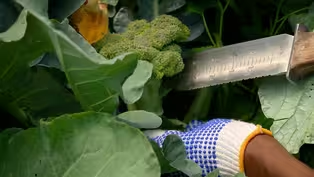
So I have my little garden tool here, and I use the rugged side of the blade.
And what I like to do is simply hold my broccoli head over, and I want to cut just below the last floret, just like that, you guys.
And I like to take mine, you know, just like that.
And you can eat 'em raw, but I like to rinse them off first, and then I'll put 'em in a salad or saute 'em, however you want to do it.
And one thing you want to make sure is to check on your broccoli every single day that you can.
I like to check on mine early morning because you would be surprised how quickly they grow, especially in high temperatures.
Remember to live, love, laugh, grow stuff and eat it.
Garden fresh broccoli is so flavorful and is a favorite of mine too.
For maximum harvest I sow both a spring and a fall crop.
Thank you for watching.
We hope you have a better understanding of how new introductions of plants are developed, and we'll try them in the landscape and the vegetable garden.
Who knows?
One might become a favorite.
See you soon.
And until then, remember, gardening is for everyone and we are all growing and learning together.
(birds chirping) >>Production funding for "Virginia Home Grown Clippings" is provided by viewers like you.
Thank you.
(gentle upbeat music) (chime)
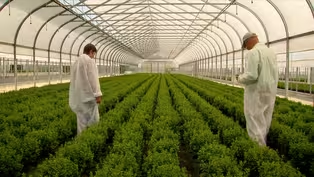
Video has Closed Captions
Clip: S25 Ep4 | 7m 59s | Learn about blight resistant boxwood cultivars being developed in Virginia (7m 59s)
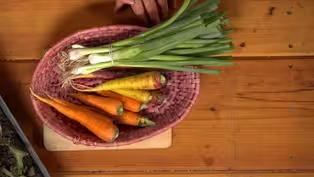
Video has Closed Captions
Clip: S25 Ep4 | 6m 28s | Get advice on choosing varieties of lettuce, beets, green beans and more! (6m 28s)
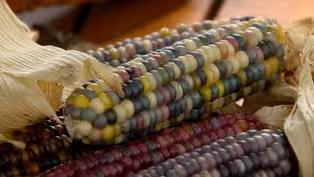
Video has Closed Captions
Clip: S25 Ep4 | 3m 1s | Get tips for growing corn and its many uses (3m 1s)
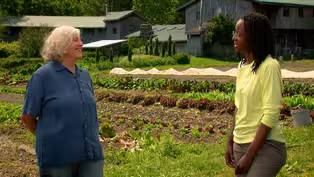
Growing a Better Vegetable Garden
Video has Closed Captions
Clip: S25 Ep4 | 8m 6s | Get vegetable growing tips from a pro! (8m 6s)
Video has Closed Captions
Clip: S25 Ep4 | 2m 52s | Get tips for growing broccoli and learn how to harvest it properly (2m 52s)
Video has Closed Captions
Clip: S25 Ep4 | 6m 10s | Meet a plant hybridizer specializing in hydrangea paniculata (6m 10s)
Providing Support for PBS.org
Learn Moreabout PBS online sponsorship

- Home and How To

Hit the road in a classic car for a tour through Great Britain with two antiques experts.













Support for PBS provided by:
Virginia Home Grown is a local public television program presented by VPM