Virginia Home Grown
Clippings: Comfort Plants
Clip: Season 25 Episode 2 | 26m 46sVideo has Closed Captions
Explore the ways plants calm us and stimulate our senses
Travel to Montpelier to visit a volunteer managed garden featuring unique herbs and discuss their uses in the kitchen and beyond. Then Go indoors to visit a pop up plant shop and discover popular houseplant varieties and learn about their care. Engage with us or watch full episodes at Facebook.com/VirginiaHomeGrown and vpm.org/vhg. VHGC 506.
Problems playing video? | Closed Captioning Feedback
Problems playing video? | Closed Captioning Feedback
Virginia Home Grown is a local public television program presented by VPM
Virginia Home Grown
Clippings: Comfort Plants
Clip: Season 25 Episode 2 | 26m 46sVideo has Closed Captions
Travel to Montpelier to visit a volunteer managed garden featuring unique herbs and discuss their uses in the kitchen and beyond. Then Go indoors to visit a pop up plant shop and discover popular houseplant varieties and learn about their care. Engage with us or watch full episodes at Facebook.com/VirginiaHomeGrown and vpm.org/vhg. VHGC 506.
Problems playing video? | Closed Captioning Feedback
How to Watch Virginia Home Grown
Virginia Home Grown is available to stream on pbs.org and the free PBS App, available on iPhone, Apple TV, Android TV, Android smartphones, Amazon Fire TV, Amazon Fire Tablet, Roku, Samsung Smart TV, and Vizio.
Providing Support for PBS.org
Learn Moreabout PBS online sponsorship(gentle upbeat music) >>Sycamore Tavern's been here since 1799.
There was a garden here initially, and the Hanover Herb Guild decided that they were gonna renovate the garden.
They used a lot of information from Colonial Williamsburg, and they came up with this cute, little garden.
>>The number one killer of house plants is overwatering, right?
Just put your finger in, like an inch in, feel if the soil is dry.
If it's dry, then that means it need some water.
If it's moist, leave it alone.
(birds chirping) >>Production funding for "Virginia Home Grown Clippings" is provided by viewers like you.
Thank you.
(gentle upbeat music) Welcome to Virginia Home Grown.
Today we're thinking about the ways plants bring us comfort.
That can mean different things to different people.
Brightening our indoor spaces and adding pleasant fragrances to the air we breathe are just a few of the benefits.
First up, we joined Serome Hamlin, who met with Ariane Crosby at Green Vibes RVA to talk about the benefits of houseplants.
Let's take a look.
>>So this is a welcome change, being inside, even though we're still talking about gardening.
So, Ariane, can you please tell us about Green Vibes RVA, and why we're here with all of these beautiful plants?
>>Yes.
I started during the pandemic.
I was surrounded by my plants at home and so I wanted to be able to give back, right?
And also during that time where everybody was stuck at home, how can they also give back with the joy of plants, right?
So that's why I started Green Vibes.
So I'm always like a good vibes type of person.
So I'm like, "Ah, how can I have it related to how houseplants?"
So.
>>Exactly.
>>Green Vibes RVA, cultivating good vibes and houseplants.
>>Oh, awesome.
And for those beginners, what can you suggest as far as houseplants for people that could be a little intimidated to get started?
>>Easy plants, which is something I specialize in, because a lot of people I run into say, "I don't have a green thumb.
I can't take care of plants."
And if you get an easy plant, a beginner plant, it's definitely easy for you to take care of.
So I would recommend a Pothos, which is a very beautiful plant, very green.
I love the vein of the plant, right?
So you could put it anywhere in your house, right?
The bookshelf, the window sill, and you can actually see it grow, right?
For a beginner, you wanna see, I wanna make sure my plant is growing.
So this is a good beginner plant as well.
I also have the Spider Plant, right there, is a nice beginner plant as well.
It grows just almost similar to the Pothos, so that way you can give clippings to friends as gifts as well.
So very beautiful plants.
>>I can see where it's starting to.
>>Right?
Yes.
So more of those will come and you can just go ahead and clip 'em, maybe propagate, or give it to a friend.
>>Share the wealth.
>>Yeah, share the, exactly.
You know, share the wealth.
So if you're trying to find a unique gift to give to someone along with a book or a candle, you could also give 'em a plant as well.
>>And then speaking of giving attention to the plants, what advice can you give to anyone that's starting?
You know, 'cause certain plants require certain- >>Yes.
Yes.
>>Attentions.
As far as lighting or watering.
>>Yes.
>>Those are some of the things that a lot of people would have questions about.
>>That's true.
I would say every plant is different, right?
Not every plant is the same.
So you wanna make sure, as far as lighting in your house, where are you gonna put this plant?
Is it gonna be in the kitchen?
Is it gonna be in the living room?
Is it gonna be in the bedroom?
So depending on the type of plant that you bring home, you wanna make sure it has the right lighting.
So for a Monstera here, it requires medium to bright, indirect light.
So right, so that's something that could be in the windowsill that gets great light.
Or also your living room that has some, you know, huge windows that gets good lighting as well.
Watering, that is also key.
The number one killer for houseplants is normally overwatering, right?
>>Yes.
>>So overwatering your houseplants normally would cause them to die.
So the best tip to not over water your houseplant would be to put your finger in the soil, right?
One inch into the soil.
See if it's dry.
If it's dry, then it needs a little watering, right?
If it's moist, then you don't need water at all.
>>Poke before you soak.
>>Right.
>>Always go in and really stick your finger in and see if the plant actually needs it before you give it 'cause that is- >>Yes.
Yes.
>>Exactly right.
>>Like feel it, right?
Touch it.
It's yours, right?
This is yours.
You brought it home.
So go ahead and touch it and just see exactly the care that it needs.
Like this plant here, even though you can't tell, but it's hidden, has a yellow leaf, right?
So that's okay to get some scissors, prune it off to make it look pretty, 'cause then that way, the plant could just focus on the healthy leaves.
>>On the healthy leaves.
>>Yep.
Yep.
So these are like one of my favorite types of houseplants, right?
Easy to take care of and also remind you of how to take care of self, right?
So it's very important to, in this journey of becoming a plant parent, right, to also remind yourself to take care of you.
So your plant need water.
Did you check to see if you had any water today?
Right?
Your plant needs light, right?
Did you go outside and get some vitamin D or just step outside from being in the house all day?
Especially people that still work from home, right?
So you wanna take a moment to like, ah.
>>Just get out and breathe.
>>Get out and breathe.
Exactly.
And then another key thing is naming it, right?
Naming your plant.
It's your plant.
This is yours.
So you can name it, have fun with it, talk to your plant.
Give it encouragement as a reminder to give yourself encouragement as well.
But another thing to add as far as element of design, the color, every leaf is different, right?
So sometimes you don't want the same plant all the time, right?
And a lot of people do.
And if that's what you like, that's what you like, right?
>>Yeah, so there's so many different options that people can have, from big bold leaves to things with nice modeling or variegation.
There's many different plants that will make people happy and have, you know, different styles, the silver spotting.
>>Yeah.
>>So there's so many different varieties.
>>And even the Monstera has the cut in it.
So it just has the little slits in the side.
So I really appreciate the different style of leaves.
>>Yeah, so tropical plants are just so awesome and there's just so many different varieties and there's always gonna be something for someone.
>>Yes.
Yes there is.
And it just connects you back to nature, connects you back to earth, right?
Gives you that energy that you need.
A lot of benefits of houseplant is, it purifies the air, right?
It helps reduce stress.
It makes you more productive, right?
>>That's exactly, especially in these times where more people are spending more time indoors.
That's a nice tip to think about is, you know, purifying the air that you're breathing constantly.
>>Constantly.
Right?
And then also inviting, if you're not a person that goes outside, but inviting that inside, right?
And just making it more, ooh, just magical, right?
>>Yes.
>>Yeah.
I really think of a jungle when I think about it.
So it's just very magical.
So I really just appreciate just the texture, the height, the different pots that you can purchase or create yourself and just reuse.
Just like this.
"Sometimes I wet my plants," it's just funny.
>>Plants, it's just funny.
>>Right?
(laughs) So a reminder to, you know, put water in it and it's okay to just have fun with it, right?
Because they are yours, they are your babies.
So it just, it has been truly a great journey and I've enjoyed the journey of just being able to share this with others, right?
The joy of houseplants 'cause it really makes me- >>Awesome.
>>Feel good and I want the people to feel good as well.
>>When you feel good, you can make other people feel good.
>>Yeah.
>>So it is, it's very nice.
This has been a very interesting conversation.
I'm so glad that we were able to talk about houseplants today.
>>Yes!
>>I think I'm going to end up having to go and pick up some more- >>Absolutely.
>>Houseplants for myself.
>>Okay, okay!
You can pick some up here.
>>And do some self care.
Yes.
(Ariane laughs) Thank you very much.
>>You're welcome.
Thank you.
I'm a plant parent, and seeing all those different types of tropicals has me yearning for more.
Houseplants have many benefits.
They've proven to increase our focus, enhance memory retention, reduce stress, and foster our imagination.
So I say, the more the merrier.
Next, Amyrose Foll has a tip for propagating another type of popular houseplant succulents.
(upbeat music) >>House plants have many benefits from improved air quality to aesthetic appeal.
For me, I really enjoy decorating with houseplants.
And while I may not be the best keeper of house plants, I enjoy gardening outside.
Succulents are a really great way to add that appeal to your house.
You can start with just a few and propagate many, and it's very simple to do just starting with a single plant that you might pick up at your hardware store or at your garden center.
Now these are ghost plants.
They're very easy to propagate, and one of the things that I like to do is clip off the rosettes.
I cut this with some clean scissors.
You wanna make sure that your scissors are always clean because you don't wanna introduce disease into the plants.
And then I use these smaller ones to take these leaves on the sides off.
Now if you can see, this one has a leaf that doesn't look quite so healthy, so we're gonna remove that one and just discard that guy.
You wanna start with the healthiest plant material that you can to ensure success.
Starting with the right soil mix is very important.
What you're gonna wanna do is use a pretty easily commercially available cactus, palm, and citrus mix.
You can get this at any hardware store or garden store in the area.
Once you've got all these little guys here, we're just going to put them around on the top of the soil here, close as you can.
Each one of these guys is gonna become its own plant.
Now there's a difference of opinion.
Some people like to spray them once or twice real quick, once they lay them out here.
I like to leave mine dry for a couple of days, three or four days just to kind of harden off those little ends.
You can just take them and very simply, one or two sprays.
You don't wanna make them too wet.
They're from arid environments generally, so they're used to being dried out.
What's going to happen is each one of these little leaves is going to start putting off something that looks like this little guy.
This is called a pup on this end, and it's putting roots down on this end.
And as you can see, because it's been left alone, it's extremely rubbery.
It's not turgid like these leaves are over here.
And that's completely fine because this is going to feed this pup and this little root right here, and eventually this will basically wither and dry up and this will become your new little plant.
Think about this, you pay $2, $3 for one of these guys, and you can really propagate hundreds and hundreds of plants.
Succulents are a really easy and great choice.
If I can do it, you can do it.
And just remember to have clean scissors, the proper soil, and don't over water them.
And soon you'll have more plants than you know what to do with and you can share with family and friends.
Happy gardening.
Succulents are easy to grow, making them perfect plants for new plant parents to try, whether an indoor plant or one in the garden.
Another benefit of plants is they boost our mood through the compounds they emit, particularly serotonin and dopamine, which are often referred to as happy hormones.
And next, I visited Hanover Herb Guilds garden in Montpelier to talk with Crystal Delk about the many uses of the herbs in their colonial style garden.
Let's take a look.
>>So the Sycamore Tavern has been here since 1799.
It served as a stagecoach stopover.
>>Cool.
>>For people on their way to the Blue Ridge mountains.
>>Yes.
>>And over years, it's been a lot of different things.
It's been an inn.
Of course, it's a tavern.
And it's been a private home.
>>Okay.
>>And now, it's a library that houses historical data.
The Page Memorial Library's been here for over 80 years.
>>That's a great history.
What a wonderful reuse of the building continually, from 1799.
>>Yes.
>>But I'm sure the garden on the back of the building doesn't date back to 1799.
>>It does not.
There was a garden here before the garden that you see before us.
And the Hanover Herb Guild, a group of ladies who got together and formed the Herb Guild in 1999, decided that they were gonna restore the garden.
However, when they started doing some research and planning, they realized that they should reflect the age of the tavern in the garden.
>>Good decision.
>>And here you have the Colonial Herb Garden.
>>Crystal, this is a perfect size.
I love it.
>>It is, all right.
>>Let's grab a seat.
I like that, nice bench.
Well, you were saying earlier that somebody had come by and- >>Yes, that's right.
One day when I was working here in the gardens, doing the maintenance that the Herb Guild does, two women stopped by to talk.
And they told me that they, when they regularly walk around the herb gardens, that they always stop by to see it.
And so it was really exciting, because they said, "Thank you to the Herb Guild ladies for caring for the garden."
>>You know, it's so nice to be appreciated and it's so nice for people to come and just acknowledge what you're doing.
And this is a beautiful garden.
So what is the layout of this garden?
>>So this is a typical colonial style garden parterres.
There are four parterres on the outer perimeter of the garden, and then there's this little square one in the middle.
So the square one in the middle, we usually put seasonal plants.
And so we just are finished with our daffodils.
>>Right.
>>But we have a fragrance garden, we have a culinary garden, we have a medicinal garden, and we have a- >>A household garden.
>>Thank you.
(Peggy laughing) A household garden, yes.
The plants that are in it are typical plants that you might've found in a colonial garden in the day.
>>Right.
>>And you know, in those days, they couldn't go go the pharmacy.
They couldn't go to the store.
So they would just go out in their garden and snip some herbs and, you know, use them as they were, maybe potpourri, or they would put them in a tincture for medicinal purposes.
>>Or even use it to dye their clothes or whatever, yes, yes.
>>Yes, exactly, yes.
>>But which is your favorite style of herbs?
>>Well, I love parterre gardens, but my favorite herb is burnet.
>>Ah, you like- >>Because- >>The culinary herbs.
>>It's a beautiful herb.
It looks like a shrub.
It's so pretty.
And it goes right through the winter.
So.
>>Yes.
>>Sometimes if you need something to garnish a plate, you just run out into the garden, cut a few pieces, and put it on a plate, it's beautiful.
>>Well, I love growing it, 'cause when I'm out in the garden, I can take a little snip, put it in my mouth, and I get this lovely cooling cucumber sensation.
>>Yes.
>>And it's a great plant to sorta like sustain me a little bit longer.
>>Yes.
>>It's a wonderful one.
But what are some of the ones that would be used for potpourri possibly?
>>Well, you could use Santolina, I think.
You could use the lavender, rosemary maybe.
>>Yes.
>>That's a really nice plant to smell.
>>Yeah, 'cause people forget that we bathe regularly.
(Crystal laughing) And back then, it wasn't as often.
(laughing) >>That is true, yes.
>>And also, you know, we just, these scents also would help keep insects out of the house and things like that.
>>They did.
And sometimes they would even put, so we have one called Costmary, and that herb, they put the leaves of the plant in pages of the Bible so the insects didn't eat the paper.
>>Isn't that amazing?
>>It is.
>>Yes, yes.
You know, I notice everything is IDed in here.
So what system are you using?
>>Well, a few years back, we noticed that many of our members were all getting older.
And so some of our members have even moved away.
So we used to give garden tours, and now we're not always available.
So we heard about this product called Plants Map.
And we decided that we would do that.
So we raised money with our annual plant sale, and we started putting these in our garden.
So they're QR codes on aluminum sign plates, and visitors can come in and take a self-guided tour.
They just bring their smartphone, scan the QR code, and they get a description of the plant, a photograph when it's at its best, and they can learn about the garden on their own.
>>That's excellent.
So this way, they can come here, learn about plants, and go home and plant them.
>>Yes.
>>Exactly.
What are the challenges of this garden, though?
>>Well, we have a lotta shade here.
So you may have noticed.
>>Oh, yes.
(laughing) >>So when they put in the garden, of course, the trees were younger.
Because the garden was put in in 2000.
>>Yes.
>>And they had their grand opening in 2006, so it's been here over 25 years.
>>Yes.
>>The trees have grown, and so has the shade.
>>Ah.
>>So it's a real challenge.
So we, you know, we prune the plants to look their best as they can look.
We put in fresh plants when we need to.
And of course, the annuals, well, you know, you might not have a basil plant that that's this high and this big around.
But you have a basil plant that people can see, they can touch, smell, and enjoy.
>>Actually yes, and I see you've got thyme here, and that can handle the shade.
>>Yes, yes.
>>And the St.
John's wort can handle the shade.
>>Yes.
>>So there are some herbs that will actually handle the shade better, part shade, we'll say.
>>Yes, yes, yes.
>>Rather than full sun.
>>Well as a matter of fact, one of my favorite herbs is the nasturtium.
>>Yes.
>>And I had in my own garden in full sun, as on the label, and oh my goodness, it couldn't take the southern summers.
>>No, they can't.
>>So I put it in a place that gets afternoon shade now, and it goes through the whole summer looking beautifully.
>>Yes, and many people just don't realize that if you give nasturtiums, as well as things like lettuce, a little bit of shade in the afternoon during the summer months, they'll thrive.
They just can't take that heat.
So I'm so glad you discovered that.
>>Like us in the shade in the afternoon, yes.
>>Exactly.
(laughing) We thrive too.
>>(laughing) Yes.
>>Herbs do require special soil, particularly in our clay soil here.
>>Oh, absolutely.
>>So were changes made here?
>>Yes, the soil is pretty well-draining, and that's what you need.
You know, when you have a home garden- >>Yes.
>>You have to put in the soil that's well-draining for these herbs, because they like it dry.
>>Yes.
>>And they don't like it wet.
>>No, they don't.
>>And our clay soils are not really hospitable to herbs.
>>Not at all.
>>So with the raised beds, it really is a help, because then you get to choose what kinda soil you put in those parterres.
So this is a great garden for that.
>>It would be, plus you need to make sure your pH is up, because herbs do not like our acidic soil here.
So they want it to be more of a neutral pH.
And I'm sure, because of the health of these plants, that you're monitoring that as well.
>>Oh yes.
>>So here we are in spring.
What's the next step for this garden?
>>Well, the Herb Guild is taking on sort of a renovation project.
So as you can see, when you walk around the garden, some of the herbs have been here a very long time.
>>Yes.
>>The perennials.
They're getting woody, misshapen.
So we are actually gonna be replacing some of the herbs that have been here for years.
>>People don't realize, not every plant lives forever.
And that every few years, people took cuttings of their plants, rooted 'em, and replanted them so that those older plants could be put into the compost pile.
>>And sometimes even when you take cuttings to use the plant, it's not as good, because it's woody or, you know, it's just not as good as it was from a young plant.
>>Exactly.
I hate to say it, but the older plants get, they change.
>>Yes.
>>Yeah.
Crystal this has been very, very enlightening to have such a nice, beautiful garden tucked behind a very historic building.
That it represents the building, but also that people can come here and learn totally whenever they want to.
>>Exactly.
>>Because of those QR codes.
>>Yes.
>>So I thank the Guild for their forward thinking and use of technology on something that's so well-established for many centuries, an herb garden.
>>Our pleasure.
(cars whooshing) What a beautiful place.
Everyone is welcome to explore this garden any time.
It's a great learning experience with scannable plant tags that make self-guided tours easy and enjoyable.
And now Jen Naylor has a tip to share about foraging.
She grows many herbs in her garden, but this time of year she gets excited about the wild plants popping up in her yard.
(upbeat music) >>I love spring here in Central Virginia.
It is just beautiful and it truly feels like the beginning of life.
There are wild edibles just popping everywhere, such as dandelions, wild onions, chickweeds, and clovers.
Oh my goodness, they're everywhere.
And some people think that they are weeds and they wanna get rid of them.
For me, they are nature's gift, full of nutrients and just absolutely delicious.
Now, there are some that you can go out and saute, you can go ahead and blanch and season.
Now, for dandelion, you can eat the whole plant.
The flower's edible, they're really tasty in salads.
And also leaves, you can saute them or you can blanch them and season them.
And the roots, you can actually make it into a tea, which is absolutely healthy for you.
Now, the clovers, I put them in salads.
They're just absolutely tasty.
Chickweeds, oh my gosh, it's one of my favorite, favorite weeds to eat, and it's just so delicious.
And life can be just absolutely fabulous with wild edibles.
When you're foraging somewhere, make sure that you know exactly what you're foraging and study before you go out there and pick these wild edibles.
Also, when you're foraging, make sure you have the permission to forage, and also it hasn't been treated with any type of pesticides or chemicals.
Make sure it's a natural environment so that it's healthy and good for you.
Now, there are perennials that I actually grow as well in my garden.
And one of my favorite is garlic chives.
And these are just absolutely beautiful.
I planted these few years ago, and I really don't have to do a whole lot of work, which is fabulous.
They just come back up every spring.
And as you can see, these are just absolutely healthy and beautiful.
Now, when you are harvesting these, what you do, you go to the bottom and you just go ahead and cut it right there.
And you can just take out the brown parts, and look how beautiful these are.
And if you were to cut it, not at the ground level, and if it's higher, and what happens when it comes back up, you'll see the brown spots and it's not gonna be as pretty as this.
It is absolutely versatile, and I just use it for just about everything, instead of using spring onions or onions or garlic.
I also make kimchi with these, which is fantastic.
So healthy for you.
Now, what I'm gonna do later is that I'm gonna be making a savory pancake with this, and also wild onions that I'm gonna be harvesting.
And it's just absolutely delicious.
And I hope you'll be able to go out and go out there and forage some wild edibles at this time of the year.
Live it up, eat it up, and be happy.
Life is wonderful.
Foraging can be a fun experience, which provides you with free food that's fresh and delicious while connecting you with nature.
Start with a few plants.
Become 100% sure of their ID and grow your knowledge from there.
Please remember to be kind to the plant and focus on sustainability by foraging only one quarter of a resource.
I thank you for watching.
We hope you will consider the benefits plants can bring to you your home and garden.
Try growing something different and if at first you don't succeed, then try.
Try again.
Because you can do this.
See you soon.
And until then, remember gardening is for everyone and we are all growing and learning together.
(upbeat music) Asparagus is just such a wonderful perennial crop to have in your home garden.
And it really likes a bed free from competition.
Melinda had some straw that gave her some seeds, and now she's got grass to try to get out of that bed.
So you'll definitely have to do some hand weeding to keep your asparagus bed free of any kinds of weeds.
And one of the things that can happen is you buy straw.
And what you've really gotten is hay.
And it has those seeds in it.
So you have to make sure in the future, because you do want to mulch your asparagus to keep the moisture in the soil and to prevent weeds from growing is to try to either get straw or maybe use your own grass clippings that don't have dandelion or other grass seeds in it, and that it can be a very inexpensive way to keep your asparagus bed both moist and free of weeds.
Good luck, Melinda, with getting that asparagus going.
(birds chirping) >>Production funding for "Virginia Home Grown Clippings" is provided by viewers like you.
Thank you.
(gentle upbeat music) (gentle upbeat music) (chime)
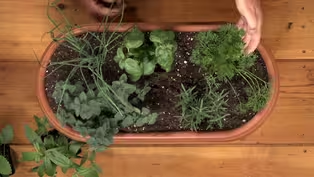
Video has Closed Captions
Clip: S25 Ep2 | 6m 31s | Learn how to grow herbs for your kitchen in containers (6m 31s)
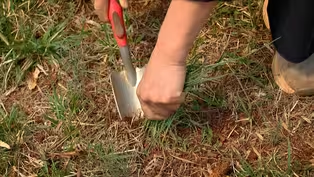
Video has Closed Captions
Clip: S25 Ep2 | 3m 1s | Discover edible spring plants that grow wild in almost any yard (3m 1s)
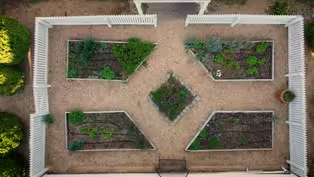
Video has Closed Captions
Clip: S25 Ep2 | 7m 37s | Visit a colonial-style herb garden to learn about plants for the kitchen and beyond (7m 37s)
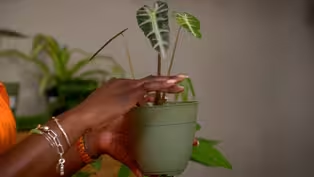
Video has Closed Captions
Clip: S25 Ep2 | 7m 27s | Discover popular houseplant varieties and learn about their care (7m 27s)
Video has Closed Captions
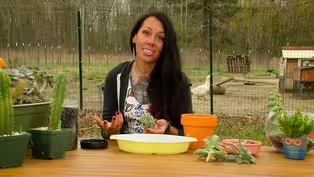
Clip: S25 Ep2 | 3m 5s | Discover how easy it is to propagate succulents to share with friends (3m 5s)
Video has Closed Captions
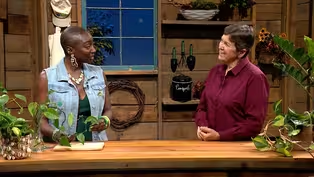
Clip: S25 Ep2 | 6m 29s | Learn about propagating houseplants and get crafty ideas for decorating containers (6m 29s)
Providing Support for PBS.org
Learn Moreabout PBS online sponsorship















Support for PBS provided by:
Virginia Home Grown is a local public television program presented by VPM